In a
first, US scientists have used low-intensity ultrasound to jump-start the brain
of a 25 year old man recovering from coma. The advance may lead to a portable
device that can no invasively “wake up” patients in vegetative state. The technique
uses sonic stimulation to excite neurons in the thalamus, the brain’s central
hub. Until now, the only way to achieve this was a risky surgical procedure
known as deep brain stimulation, in which electrodes are implanted inside the
thalamus. Researchers used a device about the size of a coffee cup saucer which
creates a small sphere of acoustic energy that can be aimed at different
regions of the brain to excite its tissue. They placed it by the side of the
man’s head and activated it 10 times for 30 seconds each in a 10-minute period.
The device is safe because it emits only a small amount of energy.
Wednesday, 14 September 2016
Now, a Robot That Needs No Battery
In a
first, scientists have created a 3D-printed, octopus-like robot made of soft
components and is powered by chemical reactions instead of rigid batteries and
circuit boards. The robot, nicknamed Octobot, could pave the way for soft
robotics. Electricity and control systems – such as batteries and circuit
boards – are rigid and until now soft-bodied robots have been either tethered
to an off-board system or rigged with hard components. Through researchers
hybrid assembly approach, they were able to 3D print each of the functional
components required within the soft robot body, including the fuel storage,
power and actuation, in a rapid manner. Octopuses have long been a source of
inspiration in soft robotic as they can perform incredible feats of strength
and dexterity with no internal skeleton.
Your e-Car Battery Won't Run Out Even When in the Garage
In a
bid to improve on the miles electric cars give per minute of charge,
researchers have designed a thin, plastic membrane that stops rechargeable batteries
from discharging when not in use and allows for rapid recharging. The technology,
applied for patent, controls how charge flows inside a battery, and was
inspired by how cell membranes transport proteins in body. It could be applied
in “super-capacitors” for electric cars and even help prevent fires that plague
some models of hover-boards, researchers said. Researchers hope the “smart”
membrane will enable the development of a new category of fast-charging and powerful
batteries called “redox transistor batteries” for automobiles that will travel
farther on a single charge.
The best
eco-car makers appear to have a hit a performance limit, and the limit is 0.4
miles-less than half a mile of driving per minute of charging, researchers
said. Today’s very best eco-friendly cars can travel around 200 miles after an
8-hour charge, while gas-powered cars can cover the same distance after only
minute spent at the pump. Researchers hope their technology can provide up to
tens of miles per minute of charge. That is still an order of magnitude away
from the equivalent measure in gasoline. Researchers are using their invention
to develop a new kind of battery in which energy is stored in a liquid
electrolyte, which people can recharge or empty and refill as they would refill
a gas tank.
Tuesday, 13 September 2016
An Edible Battery to Power Medicinal Device
An
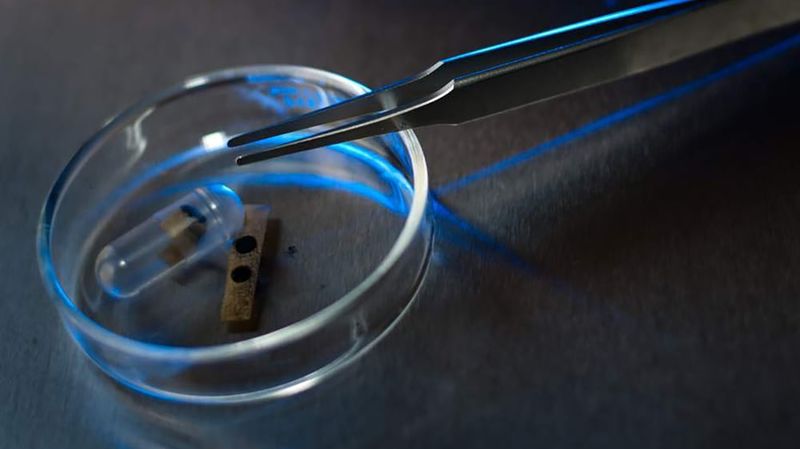
edible battery that could power medical devices put inside the body to treat
diseases has been created using the skin pigment melanin. The researchers said
they were able to build a prototype battery that could power a tiny 5 milliWatt
device for 18 hours, which would be enough to gradually release a vaccine or to
sense changes to bacteria in the gut and release medicine in response. Ordinary
batteries, which are much more powerful, are used to power things like
pacemakers but are toxic and have to be insulated from the body.
The
batteries makers are believed to be harmless because they are made out of
natural materials. For decades, people have been envisioning that one day, awe
would have edible electronic devices to diagnose or treat disease. But if you
want to take a device every day, you have to think about toxicity issues. That’s
when we have to think about biologically derived materials that could replace
some of these things you might find in a RadioShack.
The
beauty is that by definition an ingestible, degradable device is in the body
for no longer than 20 hours or so. Even if you have marginal performance, which
we do, that’s all you need. Various different kind of melanin, which is found
in our skin, hair and eyes, absorb ultraviolet light to protect people from its
harmful effects. But they also bind and unbind metallic ions, which is
essentially what happens in a battery. The researchers experimented with
different kinds of batteries using melanin pigments as positive and negative
terminals along with other materials such as copper and iron that are also
found in the body, they reported.
Researchers
found basically that they work. The exact numbers depend on the configuration,
but as an example, we can power a 5 milliWatt device for up to 18 hours using
600 milligrams of active melanin material as a cathode. The researchers are now
working on making edible batteries with pectin – a gelling agent used to make
jam – and other natural materials. They hope to create packaging that could
allow an edible battery to be used in stomach. Researchers envision using the
battery for sensing gut micro biome changes and responding with a release of
medicine, or for delivering bursts of a vaccine over several hours before
degrading.
Coming Soon, a Chip to Detect Hardware Virus
Scientists,
including one of Indian origin, are developing a new chip that can detect
malicious circuitry and prevent hardware viruses from sabotaging medical
devices, and financial, military or government electronics. The outsourcing of
chip design and fabrication is a $350 billion business and bad actors along
supply chain have many opportunities to install malicious circuitry in chips. These
“Trojan horses” look harmless but can allow attackers to sabotage public
infrastructure, Hardware defects are invisible and act surreptitiously.
Researchers, are developing a chip with both an embedded module, that proves
its calculations are correct, and an external module, that validates the first
module’s proofs. This configuration, an example of and approach called “verifiable
computing”, keeps tabs on a chip’s performance and can spot telltale signs of Trojans.
Plastic is Passe, Milk to Protect Food in Future
Much
of the plastic packaging we see in the grocery store can be recycled, from egg
containers, to milk jugs, to butter tubs. But what about that thin plastic film
stretched around wedges of manchego in the cheese bin or the 16-ounce rib-eye
in the chiller case? It turns out that kind of plastic is tougher to recycle
and might even be adding harmful chemicals to your food. Oh, and it’s not even
good at doing what it’s supposed to do: prevent food spoilage.
Luckily,
researchers are investigating alternative forms of food packaging – the kind
you can eat. US department of agriculture researchers have discovered that a
milk protein called casein can be used to develop an edible, biodegradable packaging
film. The casein-based film is up to 500 times better then plastic at keeping
oxygen away from food because proteins form a tighter network when they polymerize,
the researchers found. It’s also more effective than current edible packaging
materials made from starch and protects food products that are sensitive to
light.
Everything
is in smaller and smaller packaging, which is great for grabbing for lunch, for
school, but then it generates so much waste. Edible packaging can be great for
that. Flavorings, vitamins, and other additives can be used to make the
packaging, and the food, tastier and nutritious. These films will be more health-enhancing
then starches.
Extinct For 200 Yrs, Great Auk to Get New Life Using DNA
Scientists are planning to bring the extinct
Great Auk back from dead, almost 200 years after the penguin-sized, flightless
birds disappeared. Researchers discuss reintroducing the flightless marine
birds onto the Farne Islands, England. Until the species’ extinction in 19th
century, Great Auks ranged across the Atlantic from northern Europe to Iceland,
Canada and the US. Flightlessness made the birds vulnerable to hunting and
exploitation for its meat and feathers that reached industrial scale. In 1844,
the last birds in final known colony on Iceland Island were killed. Revive and
restore, a US based institute, which attempts “genetic rescue” of endangered and
extinct species, said it plans to extract Great Auk DNA from fossils or
preserved organs and then use data to sequence the animal’s genetic code. The important
genes would then be edited into the cells of its nearest living relative, the
razorbill. Fertilized embryos would then be implanted into a bird big enough to
lay a great auk egg, probably a goose.
Subscribe to:
Posts (Atom)