Wednesday, 16 November 2016

Soon, You Can Conduct HIV Test With A USB Stick

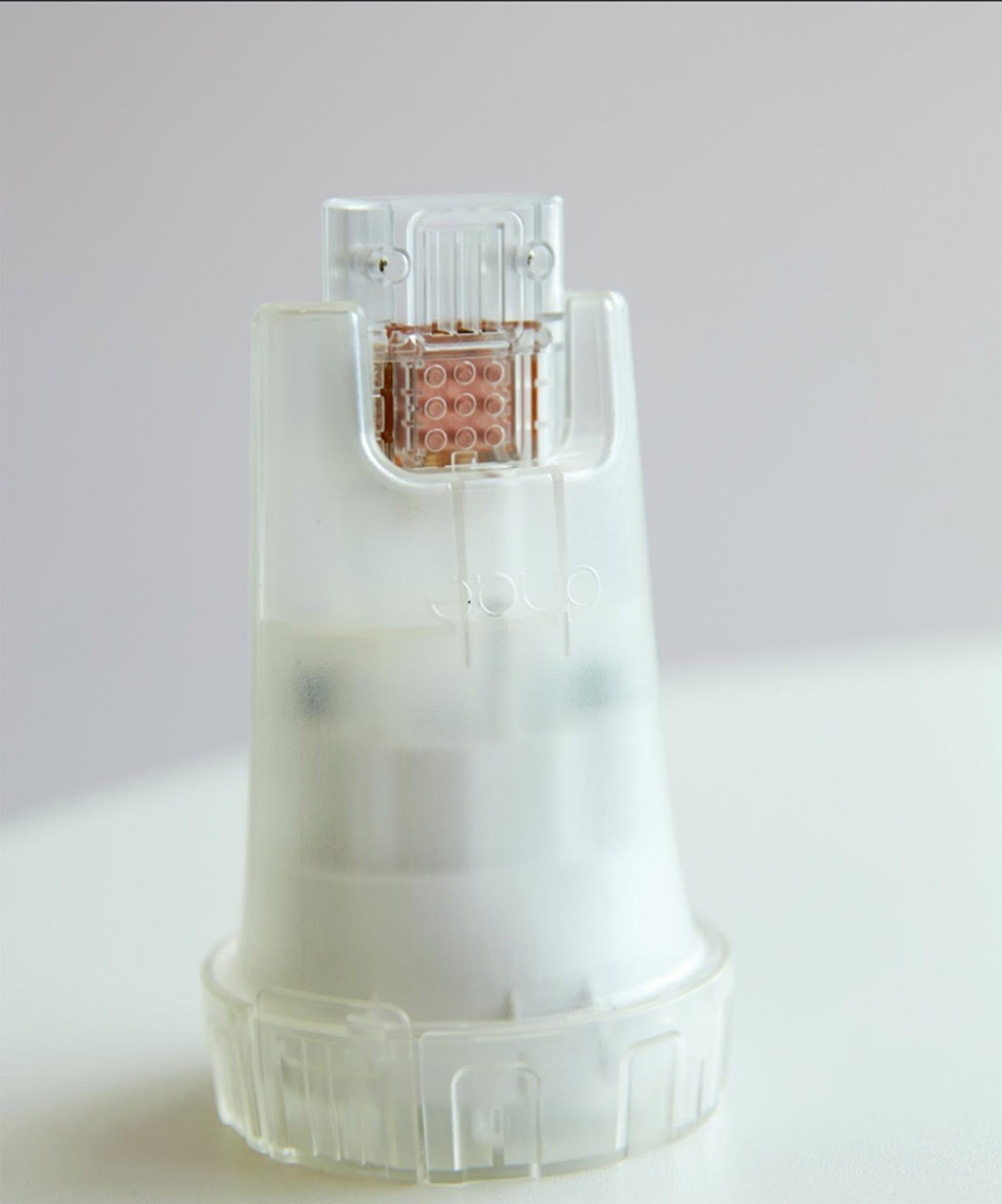
Scientists in Britain have developed a type of HIV test using a USB stick that can give a fast and highly accurate reading of how much virus is in a patient’s blood. The device, created by scientists at Imperial College London and US firm DNA Electronics, requires a drop of blood to detect HIV and then creates an electrical signal that can be read by a handheld device. Researchers said that the device could be useful in remote settings to help patients manage their treatments effectively, since current tests to detect virus levels take three days and involve sending a blood sample to a laboratory. Researchers have taken the job done by this equipment, which is the size of a large photocopier, and shrunk it down to a USB chip. The tests, which uses a mobile phone chip, requires a drop of blood to be placed onto a spot on the USB stick. Any HIV in the sample triggers an acidity change, which the chip transforms into an electrical signal. This is sent to the USB stick, which shows the result on a computer or electronic device. Results showed the stick test was 95% accurate over 991 blood samples, and the average time to produce a reading was 20.8 minutes.

Nanowires Made From DNA Strands To Power e-Devices

Scientists have successfully created gold plated nanowires assembled from DNA strands that can conduct current, an advance that may pave the way for tiny electronic devices made from genetic material. Currently, the circumference of the smallest transistors is tinier than the AIDS virus. The industry has shrunk the central elements of their computer chips to 14 nanometers in the last 60 years. Researchers at the Helmholtz-Zentrum Dresden Rossendorf (HZDR) and Paderborn University in Germany combined a long single strand of genetic material with shorter DNA segments through the base pairs to form a stable double strand. Using this method, the structures independently take on the desired form. Genetic matter doesn’t conduct a current particularly well. Researchers have therefore placed gold-plated nanoparticles on the DNA wires using chemical bonds. With the help of this approach, which resembles the Japanese paper folding technique origami and is therefore referred to as DNA origami, researchers can create tiny patterns. Extremely small circuits made of molecules and atoms are also conceivable here. This strategy, which scientists call the “bottom-up” method, aims to turn conventional production of electronic components on its head.

Wireless Implant Could Cure Paralysis In Future

Monkey with spinal cord damage that paralyzed one leg quickly regained the ability to walk with a wireless connection from the brain to the spinal cord below the injury. In recent years, scientists have achieved brain control of robotic hands, helped a paralyzed man regain use of a hand through a chip in his brain and used electrical stimulation of nerves in heal paralyzed rats. The system is unusual because it concentrates on the lower body, and is wireless rather than tethered to a computer. It utilizes new developments in brain recording and in nerve stimulation. It does require a computer to decode and translate brain signals and send them to the spinal cord. Researchers of the Swiss Federal Institute of Technology said that he hoped the system he and his colleagues developed could be transferred “in the next 10 years” to humans for therapy that would aid in rehabilitation. He emphasized the goal was better rehabilitation, not a science fiction fix for paralysis. People are not going to walk in the streets with a brain spine interface. Among the reasons why the system is not a miracle fix for paralysis is that it relays only impulses to extend and bend the leg at the right time to fit into a four legged gait, not other, more subtle movements involving changes in direction or navigating through obstacles. Humans present different challenges, for instance, in terms of balance in two legs. Researcher said that prior to this development 10 years of research in rodents was necessary. One of the reasons that only one leg was paralyzed is that four legged animals can function even without the use of one leg and retain bladder and bowel control, whereas complete severing of the spinal cord can be devastating for an animal’s life. The wireless sensor was developed by David Broton of Brown University. Combined with microelectrodes, it records and transmits impulses in the part of the brain where signals to move the leg originate. He said that one of the reasons the system might be helpful in rehabilitation was that it strengthened remaining connections between parts of the spinal cord and the injured limb. The brain recording device was combined with electrical stimulation to an area just outside the spinal cord that conveyed signals to the reflex system. The spinal cord has its own system for receiving input from the legs and responding. Researcher said that one crucial part was timing. “If the brain says it wants that limb to move, it must happen within milliseconds for that connection to strengthen.”

Tuesday, 15 November 2016

Lab-Grown Lungs Mature In Mice

Researchers have successfully transplanted lab-grown mini lungs into mice where the structures were able to survive, grow and mature. In many ways, the transplanted mini lungs were indistinguishable from human adult tissues. Respiratory diseases account for nearly one in five deaths worldwide, and lung cancer survival rates remain poor despite numerous therapeutic advances during the past 30 years. The numbers highlight the need for new, physiologically relevant models for translational lung research. Lab-grown lungs can help because they provide a human model to screen drugs, understand gene function, and generate transplantable tissue and study complex human diseases, such as asthma. Several initial strategies to transplant the mini lungs into mice were unsuccessful.

Massive 'Lake' Found 15 Km Under a Volcano

Scientists have discovered a huge magmatic lake, 15 km below a dormant volcano in South America, a finding that could unlock why and how volcanoes erupt. The body of water – which is dissolved into partially molten rock at a temperature of almost 1,000°C – is the equivalent to what is found in some of the world’s giant freshwater lakes, such as Lake Superior. The finding by researchers from University of Bristol in the UK and colleagues has led scientists to consider if similar bodies of water may be ‘hiding’ under other volcanoes and could help explain why and how volcanoes erupt. The Bolivian Altipano has been the site of extensive volcanism over past 10 million years, although there are no currently active volcanoes there. The Altipano is underlain by a large geophysical anomaly at depths of 15km below the surface of Earth. This anomaly has a volume of one and a half million cubic kilometres or more and is characterized by reduced seismic wave speeds and increased electrical conductivity. This indicates the presence of molten rock. The rock is not fully molten, but partially molten. Only about 10 to 20% of the rock is actually liquid; the rest is solid. The rock at these depths is at a temperature of about 970°C. In order to characterize the partially molten region, the team performed high temperature and pressure experiments. This measured the electrical conductivity of the molten rock in the ‘anomalous’ region and concluded that there must be about eight to 10% of water dissolved in the silicate melt. Silicate melt can only dissolve water at high pressure; at lower pressure this water comes out of the solution if form of bubbles. Crucially, these bubbles can drive volcanic eruptions.

Zika Treatment For Pregnant Women, Fetuses In The Offing

A new study of the Zika virus in mice raises hope for a way to protect pregnant women and their babies from the possible repercussions of being infected. The experimental treatment id derived from antibodies taken from the blood of people who have recovered from Zika infections. Tested on pregnant mice, the treatment reduced levels of the virus in the mother, and also protected their pups from the ravages of the virus. Zika, spread primarily through mosquitoes, has been known to cause birth defects in infants whose mothers are infected during pregnancy. This is proof of principle that Zika virus during pregnancy is treatable, and researchers already have a human antibody that treats it, at least in mice. In the study, the researchers screened 29 Zika-specific antibodies taken from the white blood cells of patients who recovered from Zika infections caused by strains in Asia, Africa and the Americas. They found one, called ZIKV-117, that neutralized all of the strains. The team then tested the antibodies on pregnant mice one day before and a day after infection with Zika. The antibody reduces virus in the mother and also in the fetus, and it protects against placental and fetal damage.

After Autonomous Cars Come Scooter

Scientists have developed a self-driving scooter using the same technology that powers autonomous cars. The innovation could help mobility impaired people move around even in indoor spaces. A mobility impaired user could use the scooter, which employs a system designed by researchers from MIT’s Computer Science and Artificial Intelligence Laboratory (CSAIL), the National University of Singapore (NUS), and the Singapore-MIT Alliance for Research and Technology (SMART), to get down the hall and through the lobby of an apartment building, and take a golf cart across the building’s parking lot. Researchers were testing them in tighter spaces. Low level control algorithms of the system enable a vehicle to respond immediately to changes in its environment, such as a pedestrian darting across its path. Localization algorithms can be used to determine the vehicle’s location on a map. Map-building algorithms are used to construct the map, a scheduling algorithm allocated fleet resources, and an online booking system allows users to schedule rides. Using the same control algorithms for all types of vehicles – scooters, golf carts, and city cars – has several advantages. One is that it becomes much more practical to perform reliable analyses of the system’s overall performance. If you have a uniform system where all the algorithms are the same, the complexity is much lower than if you have a heterogeneous system where each vehicle does something different. With software uniformity, information that one vehicle acquires can easily be transferred to another. For instance, the scooter was tested in Singapore, where it used maps created by an autonomous golf cart. Also, if an autonomous golf cart is not available to take a user across a public park, a scooter could fill in; if a city car is not available for a short trip on back roads, a golf cart might be. the new scooter made its public debut in April of this year when over 100 people were invited to take if for a spin as part of a test of the software.