Researchers have developed a
360-degree virtual reality application using a unique chair to provide full body
sensations that enables users to add customizable “feel effects” such as
raindrops or a beating heart. Virtual reality has seen a renaissance in recent
years as advancements in computer graphics, computing platforms and the
seamless flow of information between hardware and software have come together
in a powerful way. Researchers team is working to make VR haptic sensations
just as rich as the 360 degree visual media now available. Current VR systems
provide ‘buzz like’ haptic sensations through hand controllers. But technology
exists for much richer sensations. Researchers have created a framework that
would enable users to select form a wide range of meaningful sensations that
can be adjusted to complement the visual scene and to play them through a
variety of haptic feedback devices. The haptic playback and authoring plug-in
developed by the researchers connects a VR game engine to a customized haptic
device. It allows users to create, personalize and associate haptic feedback to
the events triggered in the VR game engine. The haptic definition app, called
VR360HD, was developed and tested using a consumer headset and Disney researcher’s
haptic chair. The chair features a grid of six vibrotactile actuators in its
back and two subwoofers or “shakers” in the seat and back. The grid produces localized
moving sensations in the back, while the subwoofers shake two different regions
of the body and can create a sensation of motion. Users were able to select
from a library of feel effects tested by the team.
Sunday, 13 November 2016
This Rewritable Paper Can Be Used More Than 40 Times
Scientists have developed a
low-cost, environmentally friendly way to create printed material with
rewritable paper that can reduce paper wastage. Even in the present digital
age, the world still relies on paper and ink, most of which ends up in landfills
or recycling centers. Researchers made the new material by mixing low-toxicity tungsten
oxide and polyvinyl pyrrolidone, a common polymer used in medicines and food. To
“print” on it, they exposed the material to ultraviolet light for 30 seconds,
and it changed from white to a deep blue. To make pictures or words, a stencil
can be used so that only the exposed parts turn blue. To erase them, the
material can be put in ambient conditions for a day or two. To speed up the
erasing, the researchers added heat to make the color disappear in 30 minutes. Alternatively,
adding a small amount of polyacrylonitrile to the material can make the designs
last for up to 10 days. Tests showed that the material can be printed on and
erased 40 times before the quality started to decline. More paper is now
recovered for recycling than almost all other materials combined, researchers
said. The new material saves energy, water, and landfill space and greenhouse
gas emissions.
When The Planet Spun 10 Times Faster
A cataclysmic collision not only
created Earth’s moon, but may have also knocked Earth over on its side. In a
paper published by the journal Nature, scientists say their numerical
simulations indicate that the collision of a Mars size object with the early
Earth left our planet tilted at an angle of 60 to 80 degrees and spinning
rapidly, once every 2.5 hours, almost 10 times as fast as today. But the
simulations also show how the dynamics of the moon and Earth slowed down over
the next four billion years of the solar system. For the first time, this paper
has a model that says researcher can start in one place; explain all of that without
invoking any other follow-on event. “Where did the moon come from?” has been a
persistent question over the eons. Among the rocky planets of the inner solar
system, Earth is an anomaly. Mercury and Venus have no moons at all, and Mars
only has a couple of tiny moons that may be captured asteroids. Earth’s moon,
by comparison, is a giant, more than 2,000 miles in diameter. Recently the
preferred explanation for the origin of the moon has been “the big whack”: soon
after the formation of the solar system, the Mars-size interloper that
astronomers have named Theia bumped into Earth. The resulting slosh of debris
coalesced into a slightly larger Earth and the moon in orbit around the Earth.
Saturday, 12 November 2016
Brain Scans Spot Lies Better Than Polygraph Test
When it comes to lying, our brains
are much more likely to give us away than sweaty palms or spikes in heart rate.
Researchers at University of Pennsylvania in the US found that scanning people’s
brains with fMRI, or functional magnetic resonance imaging, was significantly
more effective at spotting lies than a traditional polygraph test. The study
was the first to compare the fMRI scan and polygraph in the same individuals in
a blinded a prospective fashion. The approach adds scientific data to the
long-standing debate about this technology and builds the case for more studies
investigating its potential real life applications, such as evidence in the
criminal legal proceedings. Researchers found that neuroscience experts without
prior experience in lie detection, using fMRI data, were 24 per cent more
likely to detect deception than professional polygraph examiners reviewing
polygraph recordings. In both fMRI and polygraph, participants took a standardized
“concealed information” test.
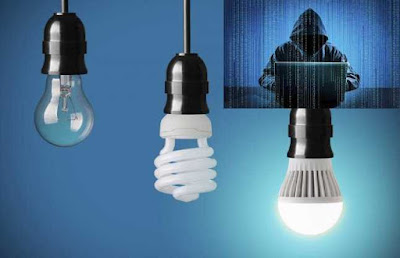
Next Cyber Attack Could Come Via Smart Bulbs
The so-called internet of Things,
its proponents argue, offers many benefits: energy efficiency, technology so
convenient it can anticipate what you want. Now here’s the bad news: Putting a
bunch of wirelessly connected devices in one area could prove irresistible to
hackers. And it could allow them to spread malicious code through the air. Researchers
report in a new paper (not made public till the filing of the report) that they
have uncovered a flaw in a wireless technology that is often included in smart
home devices like lights, witches, locks, thermostats and many of the
components of the much-ballyhooed “smart home” of the future. The researchers
focused on the Philips Hue smart light bulb and found that the flaw could allow
hackers to take control of the bulbs, according to researchers at the Weizmann
Institute of Science near Tel Aviv, Israel, and Dalhousie University in
Halifax, Canada. That may not sound like a big deal. But imagine thousands or
even hundreds of thousands of internet connected devices in close proximity.
Malware created by hackers could be spread like a pathogen among the devices by
compromising just one of them. And they wouldn’t have to have direct access to
the devices to infect them. The researchers were able to spread infection in a
network inside a building by driving a car 229 feet away. Just two weeks ago,
hackers briefly denied access to whole chunks of the internet by creating a
flood of traffic that overwhelmed the servers of a US company called Dyn, which
helps manage key components of the internet. Security experts say they believe
the hackers found the horsepower the hackers found the horsepower necessary for
their attack by taking control of a range of internet connected devices, but
the hackers did not use the method detailed in the report. One Chinese wireless
camera manufacturer said weak password on some of its products was partly to blame
for the attack. Even the best internet defense technologies would not stop such
an attack. The new risk comes from a little known radio protocol called ZigBee.
Created in the 1990s, ZigBee is a wireless standard widely used in home
consumers devices. While it is supposed to be secure, it hasn’t been held up to
the scrutiny of other security methods used around the internet. The researchers
found that the ZigBee standard can be used to create a so-called computer worm
to spread malicious software among internet connected devices. So what could
hackers do with the compromised devices? For one, they could set an LED light
into a strobe pattern that could trigger epileptic seizures or just make people
very uncomfortable. It may sound farfetched, but that possibility has already
been proved by the researchers. The color and brightness of the Philips Hue
bulb can be controlled from a computer or a smartphone. The researchers showed
that by compromising a single bulb, it was possible to infect a large number of
nearby lights within minutes. The worm program carried a malicious payload to watch
light – even if they were not part of the same private network. In creating a
model of the infection process, they simulated the distribution of the lights
in Paris over about 40 square miles and noted that the attack would potentially
spread when as few as 15,000 devices were in place over that area. The researcher
said they had notified Philips of the potential vulnerability and the company
had asked the researchers not to go public with the research paper until it had
been corrected.
Crack Found In Magnetic Shield Of Earth
The world’s largest and most
sensitive cosmic ray monitor located in India has recorded a burst of galactic cosmic
rays that indicates a crack in the Earth’s magnetic shield. The burst, recorded
by the GRAPES-3 muon telescope located at the Tata Institute of Fundamental Research’s
Cosmic Ray Laboratory in Tamil Nadu, occurred when a giant cloud of plasma effected
from the solar corona, and moving with a speed of 2.5 million kilometres per
hour struck our planet, causing compression of Earth’s magnetosphere from 11 to
4 times the radius of Earth. It triggered a severe geomagnetic storm that
generated aurora borealis and radio signal blackouts in many high latitude
countries, according to the study published in the journal Physical Review
Letters this week. Earth’s magnetosphere extends over a radius of a million
kilometres and acts as the first line of defense, shielding us from the
continuous flow of solar and galactic cosmic rays, thus protecting life on our
planet form these high intensity energetic radiations.
Soon, Gadgets Will Repair Themselves When Broken; Magnetic Ink Will Help Them Self-Heal
A sports bra that monitors your
workout. A suit that lets you swap business cards digitally. A beanie hat that
tracks your newborn’s vitals. Smart garments like this hint at a future coming
up fast. Most wearable electronics today are expensive and complicated to make,
with multiple moving parts. One option for making cheaper components is to
print devices using a process with special;, electrically functional inks. The promise
of printed electronics is low-cost, flexible devices – including batteries,
sensors and wearable circuits that can be incorporated into smart clothing. But
the multibillion dollar industry has a major downfall: Printed electronics are
fragile. Researchers are now working on a solution: ink that includes magnetic
particles. If a fabric or device printed with this magnetic ink breaks, the
particles would attract one another and close the gap. In a paper published in
Science Advances on 3 November, researcher said that their self-healing ink
could repair multiple cuts up to three millimeters long in just 50 milliseconds.
Smart clothes typically include sensors that have been woven into or clipped
onto the fabrics. For the most part these sensors aren’t printed, which can
make them more costly and rigid. Researchers wanted to make wearable devices
that were more skin like. Just like the human skin is stretchable and
self-healing, they wanted to impart a self-healing ability to printed
electronics. The ink that researchers created includes ground neodymium magnets
that are found in hard drives and refrigerator magnets. They pulverized these
magnets into microscopic particles and incorporated them into the ink. Traditionally,
attempts to create self-healing materials have relied on a chemical reaction
called polymerization. While this has the benefit of melding broken fragments
back together via chemical bonds (as opposed to magnetic attraction holding two
pieces together), self-healing polymer systems require external inputs like
heat, cannot seal large cracks and can take anywhere from hours to days to
repair themselves. Using magnetic particles for self-healing does not require
adding heat, light or other chemicals. Magnetic ink is also cheap: researchers
estimated that $10 worth of ink materials can yield hundreds of small devices. The
next steps are to determine the optimal ratios of ink ingredients for specific
applications. These inks could make their way into everything from solar panels
to implantable medical devices.
Subscribe to:
Posts (Atom)


